
US to strip alleged Bosnian war criminal’s citizenship

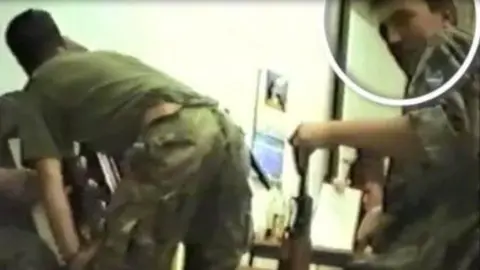
The United States Department of Justice has initiated a civil action to strip a naturalised American of his citizenship, alleging that he concealed a violent wartime past during the immigration process.
The man at the centre of the case, Kemal Mrndzic, is accused of deliberately failing to disclose that he served as a guard at the Čelebići prison camp during the Bosnian war—an infamous detention facility where grave human rights abuses were documented.
According to the justice department, Mrndzic omitted critical details about his military service when applying for entry into the United States and later when seeking naturalisation. Prosecutors say this concealment allowed him to obtain US citizenship under false pretences.
The Čelebići camp has been the subject of extensive scrutiny by international investigators. A United Nations war crimes tribunal previously determined that detainees held there were subjected to systematic brutality. Prisoners were killed, tortured, sexually assaulted, beaten, and exposed to cruel and degrading treatment throughout the conflict.
Announcing the civil case, Brett Shumate, a senior justice department official, said the Trump administration would not permit individuals who participated in persecution abroad to benefit from the protections and privileges of refuge in the United States. He described the action as part of a broader commitment to uphold the integrity of the country’s immigration and naturalisation systems.
“The message is clear,” Shumate said. “Those who lie to gain entry, and who hide involvement in atrocities, will be held accountable.”
The civil proceedings follow Mrndzic’s criminal conviction last year. In October 2024, a jury found him guilty on multiple counts of fraud and misrepresentation related to his successful applications for a US passport and a certificate of naturalisation. Prosecutors argued that he intentionally misled immigration authorities by obscuring both the timing and nature of his wartime service.
The justice department said Mrndzic failed to disclose that he had persecuted Bosnian-Serb detainees while serving as a prison guard—information that would have rendered him ineligible for entry into the United States.
In January 2025, he was sentenced to more than five years in federal prison.
Photographs released by US Immigration and Customs Enforcement appear to trace Mrndzic’s life across decades, from the early 1990s during the Bosnian conflict to his later years in the United States, where he lived for decades before his past came under renewed scrutiny.
The Bosnian war erupted in the early 1990s following the violent disintegration of Yugoslavia. The conflict culminated in the Srebrenica massacre in July 1995, when Bosnian-Serb forces systematically executed more than 8,000 Bosniak Muslim men and boys.
The United Nations later recognised Srebrenica as an act of genocide—the worst mass atrocity on European soil since the Second World War.
While Bosnian-Serb forces carried out the massacre, other factions were also implicated in serious crimes. The Čelebići camp, where Mrndzic is alleged to have served, was operated by Bosniak and Bosnian-Croat forces and became synonymous with abuse, unlawful killings, and inhumane detention practices.
The war ultimately drew international intervention. Serbian leader Slobodan Milošević was later tried for war crimes and genocide, and the conflict ended with the US-brokered Dayton Peace Agreement, signed on 14 December 1995.
Nearly three decades on, the legacy of the Bosnian war continues to surface in courtrooms far beyond the Balkans—underscoring how the pursuit of accountability can transcend borders, even decades after the crimes were committed.