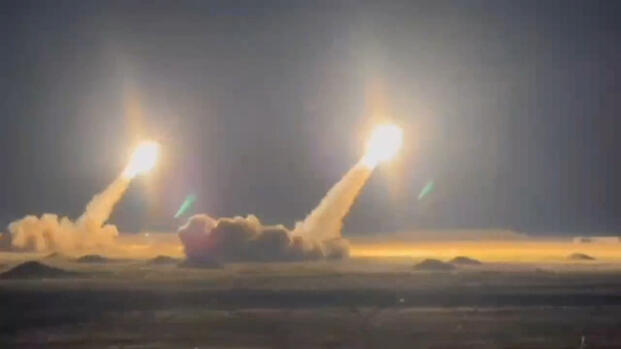
US carries out ‘massive’ strike against IS in Syria
The United States has confirmed that its military has executed a sweeping and highly coordinated assault against Islamic State (IS) positions in Syria, following a deadly ambush that claimed the lives of American personnel earlier this month.
US Defense Secretary Pete Hegseth announced that the operation—codenamed Operation Hawkeye Strike—was designed to dismantle IS combat units, logistical networks, and weapons infrastructure embedded across central Syria. The action, he said, was both punitive and preventative.
According to US officials speaking to CBS, fighter aircraft, attack helicopters, and long-range artillery systems were deployed against multiple targets. The strikes were conducted in concert with regional allies, including aircraft operating out of Jordan, underscoring the multinational coordination behind the mission.
President Donald Trump later confirmed the operation, stating that American forces were striking “very strongly” at entrenched IS strongholds. The offensive follows a 13 December ambush in the ancient city of Palmyra, where two US soldiers and a US civilian interpreter were killed in a surprise attack attributed to IS elements.
‘A Declaration of Vengeance’
In a forceful statement posted late Friday on X, Hegseth framed the operation in uncompromising terms.
“This is not the beginning of a war,” he wrote. “It is a declaration of vengeance.”
He added that under President Trump’s leadership, the United States would remain relentless in defending its citizens and service members.
“If you target Americans—anywhere in the world—you will spend the rest of your brief, anxious life knowing the United States will hunt you, find you, and ruthlessly kill you,” Hegseth said.
“Today, we hunted and we killed our enemies. Lots of them. And we will continue.”
The US Central Command (Centcom), which oversees American military operations across Europe, Africa, and the Indo-Pacific, confirmed that US forces had initiated a large-scale strike campaign against IS. Officials said additional operational details would be released as assessments were completed.
President Trump echoed that message in a subsequent post on Truth Social, declaring that the US was delivering “very serious retaliation, just as I promised,” against those responsible for the killings. He also claimed that the Syrian government had expressed full support for the operation.
Targets and Casualties
The UK-based Syrian Observatory for Human Rights (SOHR) reported that IS positions in the vicinity of Raqqa and Deir ez Zor—long regarded as militant strongholds—were among the primary targets. According to the monitoring group, a senior IS figure and several fighters were killed during the bombardment.
Islamic State has not issued a public response, and independent verification of the strike locations and casualties remains limited. The BBC said it was unable to immediately confirm the details of the reported targets.
Centcom previously stated that the Palmyra attack was carried out by an IS gunman who was subsequently engaged and killed by US forces. Three additional American soldiers were wounded in the incident. A Pentagon official noted that the ambush occurred in territory outside the effective control of the Syrian government.
However, the SOHR offered a conflicting account, asserting that the attacker may have been affiliated with Syrian security forces. No group has formally claimed responsibility for the assault, and the identity of the gunman has not been publicly disclosed.
A Persistent Threat
Although a US-backed coalition of Syrian fighters declared victory over IS territorial control in 2019—marking the fall of the group’s final enclave—the organisation has continued to operate as a shadow insurgency. It has carried out sporadic but deadly attacks across Syria and Iraq, exploiting governance vacuums and security gaps.
The United Nations estimates that IS still maintains a force of between 5,000 and 7,000 fighters across the two countries, many operating in remote desert regions or urban cells.
US troops have been stationed in Syria since 2015, primarily to train and support local partner forces as part of the broader campaign to degrade and ultimately defeat IS. Despite repeated declarations of the group’s defeat, American officials have warned that its ideological appeal and operational capability remain intact.
The latest strike signals a renewed willingness by Washington to apply overwhelming force in response to attacks on its personnel—sending a clear message that, even years after the collapse of IS’s territorial “caliphate,” the group remains firmly in the crosshairs of the US military.